Beyond the Easel: Building a Life Around Your Art
Why being an artist involves so much more than creating the next painting.
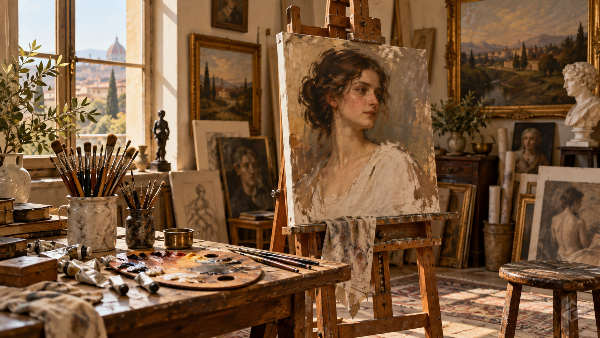
There’s something wonderful about the moment you finally sit down in front of a blank canvas. The possibilities are endless. You have an idea, perhaps a reference photograph, a particular subject or simply a desire to try something new.
But anyone who has spent time painting knows that the actual painting is only one part of the story.
There’s the preparation, the learning, the inevitable frustration when something doesn’t work, and those occasional breakthroughs that remind us why we started in the first place.
And then there’s everything that happens beyond the easel.
The Part of Being an Artist We Don't Always Talk About
Whether you paint purely for enjoyment or hope to develop a professional artistic career, the practical side of being an artist can become surprisingly complicated.
You might be working on several paintings at once, considering entering an exhibition, researching an open call, organising reference photographs, keeping track of materials or trying to establish a sensible price for a finished piece.
For artists who sell their work, there are additional considerations. How do you calculate a fair price? Are you actually making a profit after accounting for your materials and time? How do you manage commissions, clients and enquiries?
For those who teach, there are lessons to prepare, students to support and progress to follow.
None of these things is separate from being an artist. They're all part of it.
Yet very few of us began painting because we wanted to spend our time on administration.
Progress Isn't Always Measured in Finished Paintings
One thing I've come to appreciate is that artistic development is rarely a straight line.
Sometimes a painting comes together remarkably quickly. Other times you can spend days correcting something that still doesn't feel right.
I have a particular interest in traditional oil painting and portraiture, where even a relatively small adjustment to a value, edge or proportion can dramatically change the character of a painting.
Those moments can be frustrating, but they're also where some of the most valuable learning happens.
It's worth remembering that a painting doesn't have to be successful to have been worthwhile. A difficult study can teach you more than an easy success.
And developing as an artist isn't simply about producing more work. It's about becoming more observant, more deliberate and more confident in the decisions you make.
Finding Opportunities for Your Work
Another challenge, particularly for artists hoping to exhibit or sell, is discovering opportunities in the first place.
Exhibitions, open calls, competitions, workshops and artist programmes can provide valuable experience, exposure and connections.
But these opportunities are often scattered across countless websites, galleries and organisations.
Some are local. Others are national or international. Eligibility requirements vary, deadlines can be easily missed, and the cost of participating isn't always immediately apparent.
I believe artists should have better ways to discover opportunities relevant to their location, interests and ambitions.
Importantly, not every opportunity is worth pursuing. Entry fees, transport, commission rates and the likelihood of genuine exposure all deserve consideration.
Being selective is not a lack of ambition. It's part of developing a sustainable artistic practice.
Why I Created Atelier Masterclass
These wider challenges are a large part of the thinking behind Atelier Masterclass.
I wanted to develop something that recognised the complete experience of being an artist, rather than concentrating on one isolated part of painting.
A workspace where traditional artists could organise their studio practice, develop paintings, manage their artwork and materials, explore learning opportunities and handle the business of being an artist.
A place where educators could manage lessons and support students, and where artists could present their work through their own galleries and connect with a wider artistic community.
And importantly, a place where practical tools could help artists make informed decisions about pricing, commissions and the opportunities they pursue.
The idea isn't to replace the traditional artistic process. Quite the opposite.
**It's to support everything surrounding that process, so we can spend more of our time doing what matters most: making art.**
Atelier continues to evolve, and much of what I want it to become is shaped by the everyday realities artists face.
What Does Your Artistic Practice Look Like?
One of the things I find most interesting is just how differently artists approach their work.
Some have beautifully organised studios and carefully planned routines. Others thrive in what might generously be described as creative chaos.
Some paint every day. Others fit their artistic practice around employment, family commitments or other responsibilities.
There isn't one correct way to be an artist.
But I do believe we can learn an enormous amount from sharing our experiences, particularly the practical challenges that rarely feature in finished artwork photographs.
I'd be interested to hear from other artists:
**What's the biggest challenge you face outside the actual process of painting?**
Is it finding time, pricing your work, getting your paintings seen, discovering exhibitions, managing commissions, or something entirely different?
I'd love to hear your thoughts.
Until next time, happy painting.
**Neil Cameron**
Founder, Atelier Masterclass
[www.ateliermasterclass.art](https://www.ateliermasterclass.art)